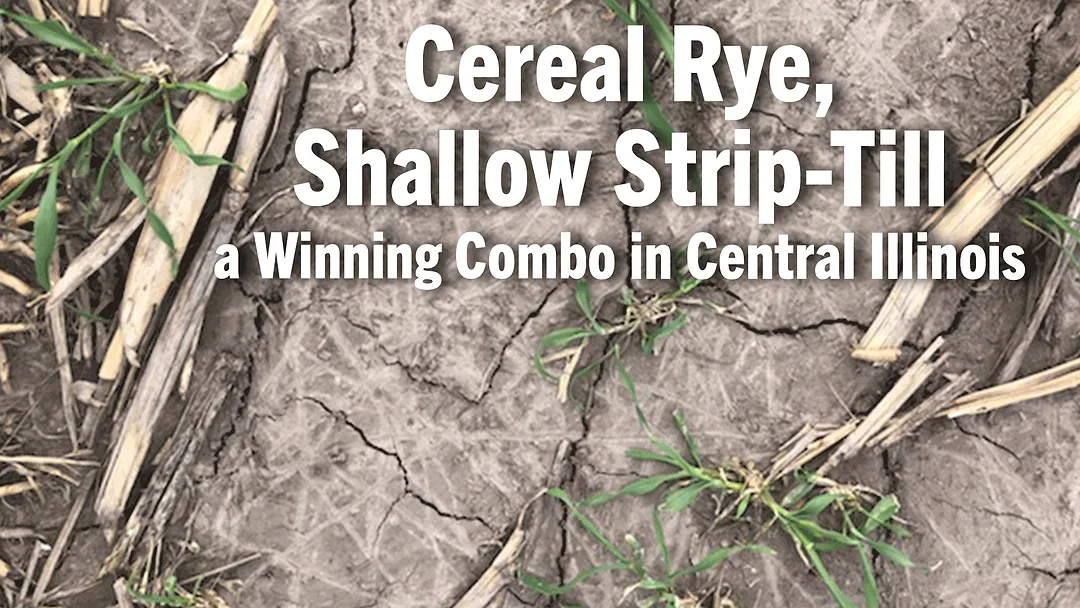
Speaking of cover crops, Josh Sullivan’s been reaping the benefits of cereal rye since 2019 in central Illinois. He seeds the rye on fields going from strip-tilled corn to no-tilled soybeans.
Let’s zoom into one of his fields now. See those lines? Josh says a soil health expert told him those are actually earthworm trails between the cover crops. As far as establishing the cover crop goes, Josh has gotten the job done in multiple ways.
“We’ve used an air seeder. We’ve used vertical tillage, had it blended with our dry fertilizer and then vertical-tilled in. Really, the best thing, if you can get it accomplished, is just an air seeder or a 15-inch split row planter. I had SeedRight plates for that, and that worked pretty well. I believe that whenever you do cover crops in front of soybeans, you’ve got more residue out there with the corn stalks from the previous year. That cover crop really helps to get the top inch or two drier, and it’s easier to plant into that than just doing straight no-till beans. It just seems like the ground’s looser and that cover crop kind of pulls some extra moisture out. But if you get too dry, then that’s a problem, but we don’t seem to have that problem in my county.”
Josh started his conservation journey when he transitioned from conventional tillage to fall strip-till in 2010. Now he’s using a Yetter strip freshener ahead of corn in the spring and split-applying his nitrogen (N) throughout the season.
Watch the full Video of this episode of Conservation Ag Update.