With harvest season in full swing, we asked readers in the Strip-Till Farmer Email Discussion Group the following question(s):
With low corn prices, are you leaving corn in the field longer to dry so your drying costs aren’t as high? If so, how will this affect your cover crop strategies? Are you going to plant cover crops late or skip them?
Let’s check out some of the responses.
Blaine Baker (Clayton, Mich.): My cover crops are planted. We use a high-boy in late August. Just starting corn harvest now. Things can get bad fast if you wait any longer and good drying days are far and few.
Robert Rabideau (Clifton, Ill.): My cover crop is planted with a drone over cash crop in early September, and yes, I’m waiting for dry down. Not uncommon for me to run into November with corn harvest.
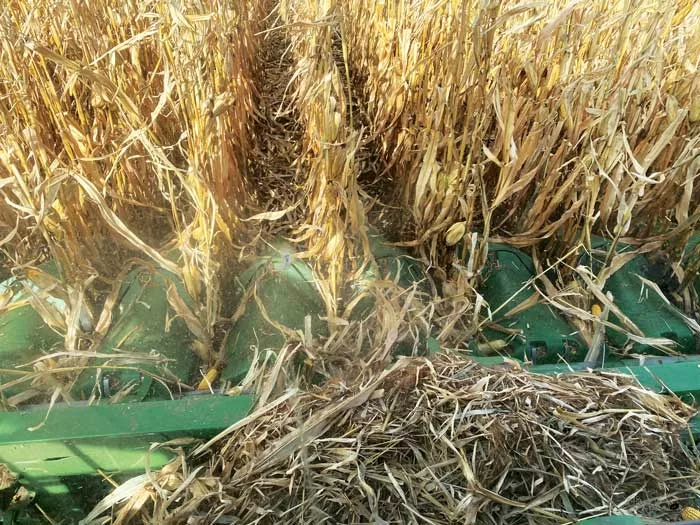
Jim Guy (West Central Minn.): Already seeded rye with the plane in corn in late August. It keeps raining so it has started growing as the corn has dried down. Only have a few acres of corn left to harvest. Most came off the field at less than 17% moisture, some down to 15%. Most of that went straight in an air bin or to town. One variety was 18%-19% and I put that through the dryer. Now with more rain the last few days, just hoping to finish without too much compaction.
This is turning out beautiful. Broadcast spring oats, barley, and dwarf Essex rapeseed about 3 weeks ago after beans were cut…. Very very impressed for first time using cover crops. Now to see how it turn out next fall. @ChrisK_Banded @Diversified_Ag @WiBeanBag @StripTillFarmr… pic.twitter.com/T9WR95ptA1
— Banded Ag, LLC (@bandedagllc) October 14, 2025
Philip Gordon (Saline, Mich.): I will harvest corn before Nov. 1 because I drill cereal rye into corn stubble. Would like discussion on crimping the rye come spring.
Jason Harrold (Akron, Ind.): Beans are harvested and wheat is planted. Cereal rye will go in after corn but the corn is still 25% or more. I have no storage and routinely wait until under 20% to harvest.
Rod Sommerfield (Mazeppa, Minn.): We have a large drone that can carry 150 pounds of seed and various no-till drills which can also be used. The advantage of the drone is being able to get the seed out there much sooner, when crops are still standing. Mid-August to Mid-September usually works best, but that all depends on getting at least an inch of rain. It is often mid-October or later before crops are off and we find the time to do it with a drill, by then the ground temperatures here in Minnesota are usually freezing with seedlings not showing up until spring when we are putting on herbicides ahead of no-till planting.
Green and 28 percent. #farmgoals pic.twitter.com/WHZRaFOGLQ
— Ryan R. Nell (@WiBeanBag) October 14, 2025
David Halsey (Adrian, Mich.): Beans are off. All cover crops have been drilled on triticale and bean stubble. Corn is too wet (19%-28%). Will give it some time to dry in the field and plant cereal rye, clover and vetch after corn is taken off. I have drilled rye in December in a snowstorm before and had very good stand the next spring. It’s a very forgiving/hardy crop. 13-way cocktail after triticale is being mob-grazed with excellent results so far.
We’ll continue to update this article as more responses come in. Click here to sign up for the free Strip-Till Farmer Email Discussion Group and join the discussion.