With the average U.S. soybean yields not moving much in the last decade and weather shenanigans making planting decisions more difficult, growers might consider what fall-seeded soybeans have to offer to improve economics and time management.
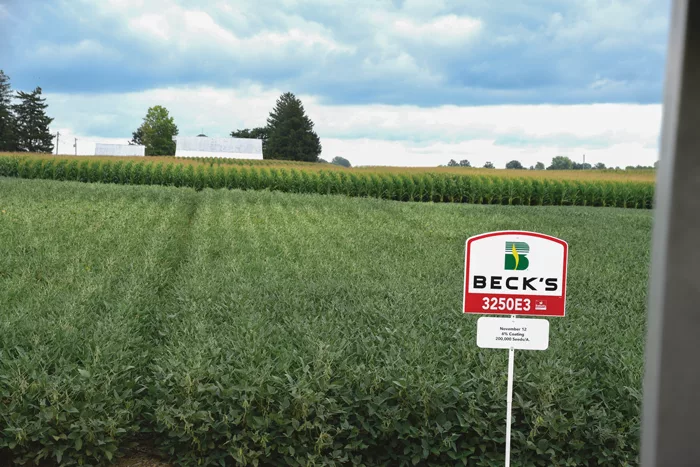
Beck’s Hybrids has been studying a fall soybean system for the last 2 seasons and has noted potential advantages by planting a portion of the bean crop in October, November or even December.
Researchers are using a proprietary coating not commercially available yet on the soybean seeds to keep moisture away during the winter so it doesn’t rot. Spring heating and moisture breaks down the coating so the seed germinates at the optimal time.
The ‘Why’ Question
What’s the major reason to plant soybeans in fall? It has to do with sunlight, says Scott Dickey, a regional agronomy manager for Beck’s who works in Nebraska, Kansas and Missouri.
The highest quality and quantity of light occurring in the summer is June 21, “so think about the depth of atmosphere that light must penetrate when it's directly overhead versus when it starts getting lower and lower on the horizon every day,” Dickey told attendees at the recent Becknology Days field tours at Beck’s headquarters in Atlanta, Ind.
“In August we lose, in this latitude, 70 to 80 minutes of light per day. The sun is having to travel further to get across our horizon. There's just more energy earlier in the summer,” Dickey says.
Continue reading more about the "whys" and advantages of fall-seeded soybeans at No-TillFarmer.com »