
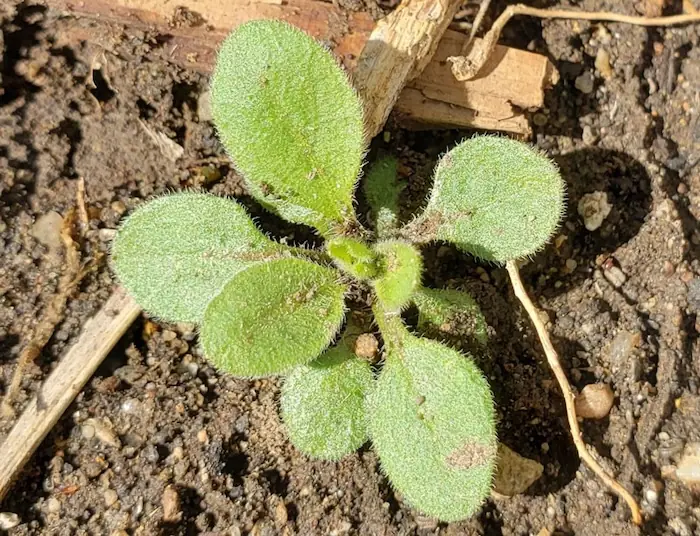
Marestail or horseweed is a challenging weed to manage in no-till or strip-till cropping systems. This weed is classified as a winter annual, but it can germinate in spring and summer, making it even more difficult to manage. In addition to an extended germination window, marestail can produce up to 200,000 seeds/plant, with approximately 80% of those seeds being able to germinate immediately after maturation. Many producers also face the added difficulty of managing glyphosate- and ALS-resistant marestail (Figure 1).
Acceptable control of fall-emerged marestail with herbicide applications at planting will be unlikely because marestail plants are generally too large, but control can be achieved with both fall and early spring herbicide applications. Other control options include tillage and cover crops.
Residual herbicides for marestail control include chlorimuron (Classic, others), flumioxazin (Valor, others), sulfentrazone (Spartan, others), and metribuzin (Tricor, others) products. Group 4 herbicides such as 2,4-D, dicamba, fluroxypyr (Starane Ultra), or haluxifen (Elevore) are good options to control emerged marestail, especially populations that are resistant to glyphosate or ALS-inhibiting herbicides. Control of marestail in the rosette stage (Figure 1) is similar among the Group 4 herbicides, but dicamba controls bolted marestail better than 2,4-D. Saflufenacil (Sharpen, others) and glufosinate (Liberty, others), applied alone or in combination, can also control bolted marestail.
Fall and spring tillage have been shown to be effective in controlling marestail in spring-planted crops. When tillage is not used in the fall, marestail will establish and persist in the spring. If minimum tillage is the goal, research suggests that marestail can be controlled when a fall herbicide application is followed by shallow tillage in the spring or vice versa.
Using cover crops can result in fewer, smaller marestail plants in a field. Research in Kansas has shown control of marestail with a cereal rye cover crop paired with spring herbicide applications. The key to achieving effective suppression of marestail with cover crops is the accumulation of adequate cover crop biomass before marestail emerges, so timely cover crop planting is important for this strategy to succeed. An accompanying eUpdate article in this issue has more information about cereal rye as a cover crop: “Planting cereal rye after corn harvest”.