The EPA has unveiled new requirements for seed-corn manufacturers as the agency addresses growing concern over rootworm resistance to single-trait Bt corn products.
A study found that crop rotations, in isolation from other management factors, can increase the functions performed by soil microbial communities that benefit plant growth.
With an increasing global population, a shrinking agricultural land base, climate change and extreme weather events, the nations of the world are focusing their collective attention to the primary resource essential to food production - the soil.
Source: Ruth and Dwayne Beck, South Dakota State University
Historically farmers considered crop rotation a valuable part of their farm management. Crop rotations can be complicated or straightforward. In any given situation there are many factors that each farmer will need to weigh and consider as they find the right crop rotation for them. There are a few guidelines that can help producers with their planning.
Is there a fallow period in your crop rotation after wheat harvest? If so, you have an excellent opportunity to seed various legume cover crop species to supply nitrogen (N) to your following crop.
Nebraska Strip-Tiller Thrives on Spring Crop Rotation Flexibility
Brandon Hunnicutt, strip-tiller in Giltner, Neb., talks about building his strips in the fall without nutrient placement, to provide crop rotation flexibility in the spring. He also discusses the potential of placing dry fertilizer in the fall to stay ahead of nitrogen regulations in the state.
Although reducing tillage intensity can provide conservation benefits and cost savings, adoption of no-till and minimum till practices for corn production has been limited in some areas, particularly in the northern Corn Belt. In this environment, a shorter growing season and cold, poorly drained soils can lead to delayed planting, low and uneven emergence and lower yields for reduced versus conventional tillage. Strip-till has been proposed as an alternative minimum tillage system for areas and soils that are not well suited for no-till management.
More growers are seeing major benefits by strip-tilling in the spring, citing cropping flexibility, slashed fertilizer costs, reduced winter erosion and the ability to deal with changing weather conditions.
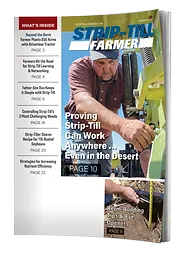
Strip-Till Farmer delivers a mix of features on strip-till farmers, strip-till management topics and trending practices in strip-till. This FREE quarterly print newsletter is available to qualified subscribers in the U.S. and Canada.
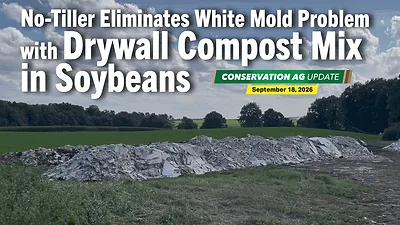
On this episode of Conservation Ag Update, brought to you by Yetter Farm Equipment, Greg and Janis Thoren share how they’re eliminating insecticides and fungicides on their Leopold Conservation Award-winning operation in Stockton, Ill.
TarasPort Trailers is a North American trailer manufacturer specializing in custom over-the-road trailer solutions for fleets, owner operators, and military use. Our company designs precision-built equipment transport trailers, freight trailer solutions, and mobile power trailer solutions...
Founded in 1954, Sullivan Hardware is a local hardware store in Indianapolis, IN. We provide the best in class products, including artificial Christmas trees, grills, and patio furniture. Spanning nearly seven decades and two generations, our family-owned business also conducts unique grilling...
Aero Energy provides professional fuel delivery services in Pennsylvania and Maryland. We offer residential fuel delivery and commercial fuel delivery backed by more than 95 years of service. Homeowners rely on Aero Energy for trusted residential HVAC services with heating, air conditioning, and...