Soil Health

International No-Till, Strip-Till and Cover Crops Research Journal – November 2024

Each month, the conservation ag group at Cornell University offers an analysis of the latest scientific papers dealing with conservation agriculture research from around the world. For this on-going web series, our editors will be selecting several research papers from the Cornell list that will be of special interest to North American no-tillers, strip-tillers and cover croppers.

In this edition:

  • Further Adoption of Conservation Tillage Can Increase Maize Yields in the Western U.S. Corn Belt
  • A New Theory for Soil Health
  • Weed Communities after Decades of Mineral Fertilization and Tillage Treatments in a Corn–Soybean Rotation
  • Changes in Soil Microbial Parameters after Herbicide Application in Soils under Conventional Tillage and Non-Tillage

Read More

Strip-Tillers Leverage Financial Assistance to Tackle Top Challenges

After enrolling with the Midwest Climate-Smart Commodity Program, Bryan Biegler put the financial assistance to good use and made the jump from 100 acres of cover crops in 2022, to covering all 2,500 acres in 2023. He has also adopted strip-till practices throughout his farm and is looking to take the practice even further by adopting vertical tillage.
Read More
2.jpg

7 In-Field Assessments to Determine Soil Health

Indiana USDA NRCS state soil health scientist Stephanie McLain shares indicators to look for in the soil to evaluate how well your soil functions
USDA NRCS State Soil Health Specialist Stephanie McLain outlines 7 soil assessments or diagnostics that can be conducted in the field to determine how healthy soil is and if farmers need to re-activate soil function.
Read More
Dan Crummett

Long-Term Studies Indicate ‘The More the Merrier’ in Crop Rotations

Studies spanning 60-years of data show farms are more resilient to the vagaries of markets, policy meddling and weather with more diverse crop rotations.
A recent report from USDA’s Agricultural Research Service has some interesting insights on the benefits of crop rotations, but researchers caution the “long view” is needed to fully capitalize on such improvements.
Read More
on-lake-erie-getting-r-1.jpg

How Strip-Till is Helping Reduce Nutrient Runoff & Algae Toxins in Lake Erie

Bill Kellogg is trying to do something about the chronic algae blooms in America's southernmost Great Lake. Instead of scattering fertilizer atop his fields, Kellogg now uses a strip till machine that knifes fertilizer pellets 8 inches into the soil — deep enough that heavy rains won't wash it away.
Read More

Top Articles

Current Issue

STF_Spring_2026_BookWithPages_Curl_art.png

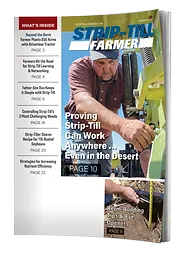
Strip-Till Farmer

Strip-Till Farmer delivers a mix of features on strip-till farmers, strip-till management topics and trending practices in strip-till. This FREE quarterly print newsletter is available to qualified subscribers in the U.S. and Canada. 
View More

Must Read Free Eguides

Download these helpful knowledge building tools
View More
Top Directory Listings