
Brought to you by:
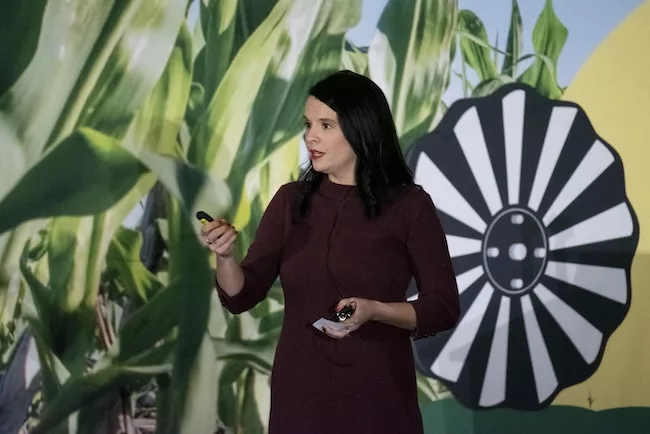
On this episode of the Strip-Till Farmer podcast, brought to you by Yetter Farm Equipment, we go 1-on-1 with Elizabeth Burns-Thompson, executive director of the Modern Ag Alliance.
Burns-Thompson, a second-generation farmer, says conservation and chemistry go hand in hand. As the executive director of Modern Ag Alliance, her mission revolves around ensuring access to critical crop protection technologies that farmers depend on.
In this conversation, Strip-Till Farmer president and CEO Mike Lessiter chats with Burns-Thompson in-depth about what’s at stake in the fight to ensure the availability of those crop protection tools. She also reflects on her ag journey, dives deeper into the important role everyone in conservation ag plays and answers the “George Bailey” question — what would the farming world look like if Modern Ag Alliance didn’t exist?




The Strip-Till Farmer podcast is brought to you by Yetter Farm Equipment.
Since 1930, Yetter Farm Equipment has been providing farmers with profitable solutions. From residue management and fertilizer placement to seedbed preparation, our equipment is designed to maximize your inputs, save you time, and deliver a strong return on investment. Explore our full line of planter attachments, precision fertilizer placement options, strip-till units, and stalk rollers at yetterco.com. Let Yetter help you prepare your equipment lineup for success today.
Full Transcript
Noah Newman:Hello and welcome to the Strip-Till Farmer Podcast. Great to have you with us after a brief hiatus as we kick off the 2026 podcast schedule. Thanks once again to our sponsor Yetter Farm Equipment for making this series possible. My name's Noah Newman, technology editor, and today we go one-on-one with Elizabeth Burns-Thompson, the executive director of the Modern Ag Alliance.
Burns-Thompson, a second generation farmer says conservation and chemistry go hand in hand. Now as the executive director of Modern Ag Alliance, her mission revolves around ensuring access to critical crop protection technologies that many farmers, including strip-tillers, depend on.
In this conversation, Strip-Till Farmer president and CEO Mike Lessiter chats with Burns-Thompson in depth about what's at stake in the fight to ensure the availability of those crop protection tools. And Burns-Thompson also reflects on her ag journey, dives deeper into the important role everyone in conservation ag plays and answers the George Bailey question:
George Bailey:What would the farming world look like if Modern Ag Alliance didn't exist?
Mike Lessiter:Identify yourself and what you do at your organization.
Elizabeth Burns-Thompson:Yeah. My name is Elizabeth Burns-Thompson. I serve as the executive director of the Modern Ag Alliance. We are a coalition of 110 plus farm and ag organizations from coast to coast that have come together to ensure that farmers continue to have access to the critical crop protection technologies that they depend upon today.
Mike Lessiter:When was it founded, and what was the original purpose and mission?
Elizabeth Burns-Thompson:Yeah, so we're relatively new in terms of the Ag Trade Association space. We've been around for just about two years, but we're made up of the trade groups and commodity groups that many farmers are very familiar with. So they're state commodity growers. We work with a lot of State Farm Bureau organizations, farmers' unions, and many of those representative federal counterparts as well out in Washington DC.
Again, those groups came together two years ago and said there necessarily needs to be a larger voice for the farmer when we're talking about the processes and availability of these technologies. The manufacturers themselves and the supply chain have been part of these conversations for many, many years, but what was really lacking was a robust seat at the table for the farmers.
And so that is really what we're trying to and have largely been successful in solving for, especially in today's age where there is a growing amount of conversation and dialogue around chemistries, modern production practices, what that means from a safe and reliable, not only food source, but fuels and fibers and the other things that we depend upon from today's American farmer.
Mike Lessiter:Tell us about your growing up as a farm girl to leading this organization today. Give us a quick summary of your path to where you are today.
Elizabeth Burns-Thompson:I am a product of Eastern Iowa. My family still farms there today, my mom and dad. They actually bought our farm the year I was born. So I joke about how if there's ever been an incentive to make it to a hundred so that my family can see that century farm reward, we certainly would love to do that.
So call me second generation involved in agriculture, predominantly a corn and soybean operation, although I grew up bailing a lot of small squares of hay, which certainly builds character. We had commercial cattle, and have very fond memories of going to the sale barn with my dad, picking out animals and those types of memories. It's something agriculture has been a part of my life; all that I can remember. So as it came into choosing what I was going to dedicate my professional career to, it just really made sense that agriculture was going to be part of that.
I have had the great privilege and honor to work for a variety of aspects of ag, everywhere from commodity associations to biofuel, some of our carbon-based incentives. I've worked in some of that work too. I joined the Modern Ag Alliance actually in January of last year. So I'm hitting my one-year mark here this week, actually. But it's a great honor to work on behalf of farmers and to be able to work on farmers, not just in the areas where I grew up in kind of the heart of corn and soybean country, but really to work with commodities and growers from all across the country with crops that are relatively new to me, but are a key tenant of what we depend upon.
Mike Lessiter:Great. Excellent. Glad to have you, and congrats on the anniversary this week.
What could you tell us about the origin story of the Modern Ag Alliance? Maybe what precipitated it, and summarize the need, which is clear, I think, but how it went from identifying the need to mobilization to where you are today with all those groups that you've gotten to get involved with you. Tell us that story, if you would.
Elizabeth Burns-Thompson:Yeah. It's probably even further back than the two years of Modern Ag, such that, if you back up 10, maybe 15 years, I think that's where we really saw a growing uptick in terms of the threats facing some of these chemistries and technologies, be it some of the work that was coming out of the European Union that was then coming into the United States and putting some real challenges on our regulatory system and the legal processes that were then put forward that truly created confusion and consistency for not only the manufacturers, the supply chain but also the farmers.
And so after a few years of seeing that kind of upheaval, court cases begin to brew, I think that's when agriculture took a step back and said, "You know what? We need to have a stronger voice of this. Otherwise, we truly risk losing the availability of tools that are proven safe, that are proven effective, and they're really critical to not only the economic longevity of operations but also what we're here today to talk about, right, no-till environmental stepping stones really, we talk a lot about how conservation and chemistry really go hand in hand. And there's an incredible amount of conservation-based tactics that are not possible without critical chemistries. And so you saw a half a dozen or dozens so ag groups that wanted to come together and bring the farmer's voice forward. And that was the advent of Modern Ag.
Over that time, the organization and coalition has only continued to grow. As we sit here today, we are well over 110 different organizations, everything from your traditional kind of corn and soybean row crop commodities and wheat and sorghum to potatoes and strawberries and blueberries and all different sorts of foods and vegetables from all across the United States. I think it's really good to see a coalition that broad. In the 15 years I've worked in ag and ag policy, I have really never seen something so geographically diverse, so commodity diverse, politically diverse, all coming together, laser focused on that single issue of ensuring that these chemistries continue to be protected in the short run and in the long run.
Mike Lessiter:And you shared some great stats today about what would happen with the absence of these tools. And I might have you recap some of that, the food costs, the yield loss, the final food costs. What do you think is misunderstood or not properly understood about the matter that your group is working to defend and make sure that farmers do have the tools available? What's misunderstood out there about it?
Elizabeth Burns-Thompson:I think that one of the biggest misunderstandings is frankly just an appreciation of how modern agriculture works today. What does an operation ... How do we get from seed to crop to supply chain to the grocery store shelves or fuel tanks or clothes on the hanger? That process, because we have so many generations, we are now so generationally removed from agriculture, it's incumbent upon us. It is necessary for farmers to talk about, and I shared this today about we need to not only talk about what we do and how we do it, but most importantly, why. And that is what will connect ultimately with that consumer because there still is an incredible amount of trust in the American farmer. They believe that the American farmer is out to do and provide safe products for them at the end of the day. There just isn't an understanding of how they do it.
But there is certainly a distrust in some of the tools or the production practices, unless there is proactive outreach and largely that needs to come from the farm community to, again, talk about what we do, the tools we use to make that happen, and why those tools are so important to bringing a safe product forward. And one of those obviously being some of these critical chemistries. We know consumers want reliable access to food. No one wants to go in the grocery store and see empty shelves. Reliability means that we've got a supply chain that there's product moving forward. That needs modern agriculture.
Consumers also want to make sure that if there is food on those shelves, that they can afford it. We commissioned work just in looking at what a world would look like without one active ingredient, right? So what would a world without glyphosate look like? The anticipated impact on food prices was anticipated between 2.4 and 2.5 times higher. And that's something that would not go unnoticed by the consumer when they walk into the grocery store.
And lastly, a consumer wants to know that it's safe, that every step of this that's leading to that grocery store shelf or what they're purchasing is safe, not only for those that are producing it for them, but ultimately for them that are consuming it. And so having trust in the process is also something that is safe for their consumption.
And I think that the fourth leg of that stool, which is incredibly important, is the societal impact. I think that's also where the environmental pieces come into play. Consumers are interested in how things are produced because they want longevity for our environment. They want more sustainability, more regenerative practices, but I don't know that there is a connection right now in their minds that regenerative, sustainable, also necessarily involves critical technologies and chemistries and things like that. And so we have work to do in terms of telling that story.
Mike Lessiter:Yeah, and you just hit on what was a nice segue into another question was how the glyphosate and other crop protection products do fit into the regen picture. Because I think there are many people, and maybe they're not the ones in the room out here today who, when they hear those terms, they're thinking something different. How does it all fit together, if you could restate that?
Elizabeth Burns-Thompson:Yeah. I think back to that point of conservation, and conservation means a lot of different things, different conservation practices, a good majority of those, the implementation of conservation practices, be it cover crops, no-till or others, are incredibly incumbent, just practically incumbent upon having chemistries to be able to manage those. And the general public doesn't maybe understand, when we say no-till, they know that it's a good thing, but they may not understand practically how no-till works and what that process looks like.
And so I think that is the underpinning key piece of that is functionally sharing how these practices work, that these match what consumers are looking for. If they're looking for more regenerative investment, more sustainable based practices, understanding this is what that practice actually looks like on the field, and here are all the tools that it takes to make that practice successful.
Mike Lessiter:We just came off the holiday season. You probably saw It's a Wonderful Life show here with the Georgia ... And I call this the George Bailey question.
So if the group that you're representing, and people like you are passionately working on the education, the advocacy, all those things, if this didn't exist, if Modern Ag Alliance did not get off the dime and start working on this, what is the potential world that farmers could be facing today or tomorrow? Kind of like when George sees what happened to Bedford Falls and became Pottersville. Can you tell us what that world looks like if we don't have people who are defending the scientifically proven products that we have today to farm with?
Elizabeth Burns-Thompson:I think the first thing that comes to mind is you're either at the table or you're on the menu. There are plenty of organizations and movements that would like to see these tools go away, and they have not just glyphosate, not just insert your active ingredient on their menu, they have a laundry list of them. And so if farmers and agriculture are not at the table telling our story, advocating for technologies, we are most certainly on the menu, and we've seen that over the last 10 to 15 years, and it truly is time for agriculture to step up.
Mike Lessiter:A lot of the work that you're doing is with policymakers at the state and federal level. What do you want growers to know, to hear from on how they have to get involved in telling their side of the story to protect their image? They can't let someone else do all the heavy lifting, right? What can growers do to help you in what you're doing and in terms in helping them again?
Elizabeth Burns-Thompson:I think a really common theme that we heard earlier today from some of the speakers at the conference today was to try something. And much of that was predicated on trying a different maybe production practice or a different type of tool as part of your operation.
I would argue much the same goes in what we work on. Try something, attend a day on the Hill with one of your organizations. Get to know either member of Congress or your local elected official. Get to know them on a first name basis would be great. But get that relationship in place so that when we have those opportunities to have policy conversations, they look at you as the trusted resource. Before they go to the internet or they depend on the loudest noise in the room, you really want to be a trusted resource for your elected officials, and that starts with building relationships.
So in the spirit of try something new, I would encourage growers to try something new also off the farm by getting involved more politically.
Noah Newman:Let's burn a quick timeout for a word from our sponsor, Yetter Farm Equipment.
Speaker 5:Looking for innovative solutions to maximize your farm's productivity? Look no further than Yetter Farm Equipment. They're dedicated to providing farmers with the highest quality equipment, from row cleaners and closing wheels, to fertilizer equipment, strip-till units, and stock devastators. Yetter has the tools you need to optimize your farming operation.
Visit yetterco.com, that's Y-E-T-T-E-R-C-O.com to learn more and find a dealer near you.
Mike Lessiter:Knowing that the message out to policymakers and such is important, if they left their desks and came to an event like this and rubbed shoulders elbow to elbow with farmers and the people that you just addressed, what do you think might switch a light bulb on, or what they might think differently about if they got into a room of practical farmers like we had today? What might be learned from that experience?
Elizabeth Burns-Thompson:I love to be able to go and ask a lawmaker what they believe to be true about an industry or what they believe to be how things work. And I think that's a question I would encourage growers to go in and maybe ask of their elected officials as well is, "What is it that you think that I do on my farm?" Or, "Do you believe that I'm producing a safe and effective product and bringing it to market?" Because that'll help you understand where there may be gaps of misunderstandings. And that also helps build rapport, right? That tees up a conversation, and it's less of the being talked to or being talked at. It creates an opportunity of, "Let me understand your understanding of reality, and I'll help you understand my version of reality and will help come to terms with what's missing in between." And that's the process of effective policymaking, and that's predicated on relationship development.
So I think understanding their perspective is important for them to be able to understand your perspective that's got to be mutual. So again, foundation on relationship development, but I think showing, we think about also agriculture as being so generational, and the statistics say that more than not of us in this industry are older than younger, which are a matter of perspective. Obviously, age is just the number. But that there's also a connotation that things are done an old way or because they've always been that way. And that really couldn't be further from the truth.
Agriculture is one of the most technologically driven. People are hungry for innovation. We've got to be able to have the dollars to be able to implement those innovations, right? We go to fun shows and see new technologies and new innovations. We can't do everything all at once. The almighty dollar doesn't always allow for that, but there is a hunger and an appetite for trying new things, for doing new things.
And I think helping share that story is incredibly important because again, go into Google and type in farmer, and you're going to get pictures or clip art or something of a man with a pitchfork. And unfortunately, a good chunk of the population, that's what comes to mind when they say farmer. And I walked through the conference today; there's no one standing there with a straw hat and a pitchfork on.
Mike Lessiter:Right, right. I think you raised a good point here a moment ago. And in a previous life, I was involved in manufacturing interest going up on the Hill. And what I think needs to be learned, and maybe agriculture is farther ahead from the industry I came from, but we can't just expect the people on the other side to understand what it is we do, right? We have to take some responsibility, the things that you just said, getting involved, going up, engaging, not barking, not each other telling each other what they think they ought to do.
Elizabeth Burns-Thompson:Well, and it couldn't be more true. I think back to that point on, success is predicated on relationships at the end of the day. And farmers, I make this analogy. No one loves the cold call. No one loves the guy that shows up with things to sell at the shop on a busy day, right? No one likes to be that person making a cold call. No one loves to get that cold call sale type outreach. But what we do do is we spend a lot of time with the people that we know, respect, and have relationships with.
And so spending time to build relationships before you have a policy ask associated with it is incredibly important. We do that in every other walk of our lives. It would make sense that we would do it much the same here, right? Developing those relationships with policymakers, even if they fly out to DC every week. I used to joke; they put their pants on the same way we do, one leg at a time. There are people just like us, and they have a hunger to learn, not only them, but also their staff.
I think that's also an important thing depending on what area of the government you're working on. It's not always just meeting with the member or the elected officials, spending time and developing relationships with their subject-matter staff. That's incredibly important in Washington DC because those are the folks that are really getting into the weeds on these issues. And so that is time, energy, and outreach very well spent.
And again, that's kind of writ large. But relationships; take time to have those relationships so that you become that trusted resource. And then it no longer becomes who is the most vocal or the loudest in a room that gets something done. It is the one that is the most thought-provoking, the one that has the relationships in place that are going to be sitting in that legislator's mind when it comes time to push the button or make the vote of what is good policy and not.
Modern Ag has been working on policy solutions. This will be now going into our third year at the state level. Last year, we were part of policy proposals in about 12 states, ranging everywhere from Idaho down to Florida and a handful in between. Very pleased to say that we were able to get a few of those across the finish line up in the state of North Dakota as well as down in Georgia. Those landmark bills were not only passed bipartisanly but also signed into law by the governors in those respective states, which is a huge, huge step forward for this industry.
We're hoping to take that momentum going into 2026. We do anticipate working in probably about eight states at this point in time. There are some states where that legislation will be carried over from 2025. So places like my home state of Iowa, places like North Carolina, Tennessee, where we made it through a chamber, and we're going to continue to work on finishing that range through the next chamber. And there are other places where this legislation is being teed up for the first time. And so these legislators are going to be having initial new conversations.
But I do anticipate that through the mountain west all the way down to the southeastern part of the United States, there's going to be a robust amount of conversation on pesticides, pesticide labeling, and providing certainty for farmers in those states. And I would encourage those that may be listening to this here today, if you are in one of those jurisdictions, to go visit our website and learn about the bill or bills that we're working on in those states and take some time to advocate.
However, if you are not in a state that has active legislation, your voice is also incredibly important. Not only for building a foundation with lawmakers about just how important these tools are so that we don't risk losing ground in some of those areas, but also we're working on the federal level as well, because we don't want just certainty to be provided in a patchwork number of states. We think every farmer should be able to, in every corner of this country, have the clarity and consistency around these labeling provisions.
And so those voices are incredibly important with your members of Congress on promotion of the Ag Labeling Uniformity Act. We hope it is part of a farm bill proposal. Who knows? By the time this airs, maybe we will have farm bill text out the door. I'm optimistic, so cheers to our future selves, if indeed we are sitting here with farm bill text with that provision, but voices are incredibly important.
So again, try something new, get involved.
Mike Lessiter:This conference out here is 35 years old, and really its Genesis came from the support of the crop protection companies. That's how we got it going, got it moving. I sense that, and I want to get your take on it. I think they were under attack out there and have maybe hunkered down a little bit. I wanted to get your take on whether that's kind of the reality and that's why what you're doing is perhaps very important in the current chapter we're in.
Elizabeth Burns-Thompson:Every piece of agriculture is having to hunker down right now. I think we saw some data points earlier today about just the astronomical type of losses that agriculture is seeing. And that is felt at the farm gate, that's felt in your local ag retailer, our co-ops and ag input suppliers too, right? Everyone is tightening their belt.
There are things that we know we can't control, right? We can't control the weather, although some argue we can. I think we'd do a better job of it if we could. And only to a certain extent can we control the markets from a hedging and whatnot perspective. But there are a number of things that can eliminate levels of uncertainty in this industry. And one of those is the regulatory challenges that frankly we created for ourselves. And that is, again, not to self-promote here, but that's one of the things that Modern Ag is trying to do is to remove a layer and level of uncertainty that every layer of this industry is facing to provide some clarity and consistency and remove uncertainty.
So with that should hopefully create some leveling, if at all possible. Politics has its ups and downs, but certainly we do think that this is one step forward that can provide some clarity for agriculture and provide some consistency.
Mike Lessiter:And maybe in the hunkering down, some of it seems a visibility issue, like trying to just, "Hey, let's let things quiet down a little bit. There's a misunderstanding out there." And I guess that's what I was looking at, if there is some of that going on, or we sense that there could be.
Elizabeth Burns-Thompson:We've always seen kind of a continued uptick in terms of the amount that Joe and Joe public consumer wants to know about products, be it your food products, your fiber products. Anything that they are purchasing, I think there's a want to know more.
A key piece of that is almost everything that comes to market has a farmer's fingerprints on it in some way, shape or form. And so it is as incumbent now than ever that farmers are at the forefront of that conversation, and they need to be the ones that are stepping forward and saying, "These are the tools." And not just the chemistries, right? "These are the production practices; these are the types of machinery; these are the types of biotech innovations that I'm using, and here is why." And the best person to deliver that message is the American farmer.
It's not always the supplier or the company that's providing them. It's the person that's choosing to purchase that product or that input or that seed or that machine, and why ultimately they did so, and how that then reflects into a safe, cost-effective product for you as a consumer at the end of the day. And that's the American farmer. They have to be the ones that are telling that story.
Mike Lessiter:I think you see this firsthand by coming here and maybe some don't or don't understand the vantage point of the crop protection companies. I think where we would find very good agreement with your company, the crop protection companies, ourselves and the people here is that we want to know all the potential ingredients that can go into conservation and successful farming practice. And it's up to everyone to use what they want, but we don't want anyone to have to be told how to farm. That cannot be good for everybody. Could you elaborate on that thought for a moment?
Elizabeth Burns-Thompson:I think America has been predicated on having choice, right? That's why there's a whole aisle for cereal and a whole section of produce in our grocery stores. In fact, there's four or five different choices when you go fuel up, right? We are a country that wants to allow people to have choice, in large part knowing that there may be different choices that are best suited for you and your family that are a different choice than I may make for myself and my family, and that's okay. That's kind of what America was built upon.
The same could be said on the production practices that lead to those end products. So what works best on your farm, both environmental, ecologically, cost effectively, longevity wise, those are all different factors you're having to weigh for what works best for your operation.
And everyone in that room this morning was having to make those cost benefit type analysis on each of these things to figure out what works best. But there is not a one size fits all; this is a good farm and this is a one size fits all not good farm. We don't do those types of categorizations. We want to try; we want to be innovative; we want to continue to change. And that's what builds resiliency too, is being able to have that trial and error because some things work in places very well, and they don't work in other places. Some things work some years, but don't work very well the next year. And so it is really tough to make nice, neat boxes of this is good or this is bad, or this is what we should always have, or this is what we should never have. And so much to say not only production practices, but tools that are used as part of that.
And we want an environment that continues to stimulate and incentivize change and innovation because that's what builds resiliency, and that's what's going to keep farming going full steam ahead for generations to come. And I think that's also something that breeds an excitement for the next generation, right? No one wants to go into an industry that feels stagnant, that feels the same as it's always been. And agriculture isn't that way. It looks a whole heck of a lot different than when my grandpa was farming, and generations before that, and that's because we spurred innovation, we brought technology, and it was exciting for the next generation, and we need to continue to do that.
I would leave your listeners with that common theme of conservation and chemistry really go hand in hand. There are some out there that that really are not making that connection. And I think it's incredibly important that we can't have conversations with one without the other being brought to the table. And so Modern Ag is working diligently to try to make sure that those two issues are coming together, especially in the policy realm, and ensuring that agriculture not only continues to have the tools that you have today, but we have an environment that's going to bring new innovations, new technologies, and new chemistries forward for years to come.
If that's something that excites you listening to this here today, I would encourage them to follow along and join along with our mission at modernagalliance.org.
Noah Newman:All right, that'll wrap things up for this edition of the Strip-Till Farmer Podcast. Big thanks to Mike Lessiter and Elizabeth Burns-Thompson for that great conversation, which was recorded recently at our National No-Tillage Conference, January 7th. And big thanks to our sponsor, Yetter Farm Equipment, once again for making this podcast series possible. And remember, for all things Strip-Till, head to striptillfarmer.com.
I'm Noah Newman. Thanks for tuning in. See you next time.