Understanding the nutrient content of cover crops can be challenging because it depends on many different factors. Grasping everything that could affect the nutrient value of cover crops can be like trying to drink from a fire hose, says Jim Hoorman, but there are ways to simplify and understand how to determine what nutrients cover crops deliver to cash crops.
As the growing season for soybeans progresses, the plants may begin showing signs of chlorosis or other leaf discoloration in all or parts of the field. There may be many causes of this discoloration. Nutrient deficiencies are one possibility.
Each month, the conservation ag group at Cornell University offers an analysis of the latest scientific papers dealing with conservation agriculture research from around the world. For this on-going web series, our editors will be selecting several research papers from the Cornell list that will be of special interest to North American no-tillers, strip-tillers and cover croppers.
Dan Kaiser, Univ. of Minnesota Extension nutrient management specialist, explains what base saturation is and what the current research says about it when it comes to managing crop inputs.
“Ultimately, good nitrogen management is about adapting, both to your field’s characteristics and to the season’s unpredictability,” says Bill Long, Pioneer field agronomist.
Andrew Focht is still trying to figure out the best fertilizer rates for his farm, but his goals are clear. He wants to slash his fertilizer bill by 25% and use only 0.8 pounds of N per bushel, which is about 0.3-0.4 pounds less than he’s used in years past.
Here are over 40 actionable ideas, tips and observations from the most recent roundtable discussions at the National Strip-Tillage and No-Tillage Conferences.
The Hutchisons' use of variable-rate nitrogen applications onto crops are split up through the growing season to boost yields while reducing the potential for runoff. To further protect water quality, they practice mulch and strip-till practices, have installed grassed waterways and buffers, and have completed wetland restoration projects and forest management.
Efficiency is the name of the game for Shawn Olsen, who farms 4,500 acres with his dad, David, brother, Kelly and son, Carter, and runs a custom strip-till business that covers up to 25,000 acres in east central South Dakota.
Obviously this goes against many of the concepts we emphasize in No-Till Farmer, but I was interested in understanding the “why” behind this no-till farmer’s decision to plow again on heavy soils.
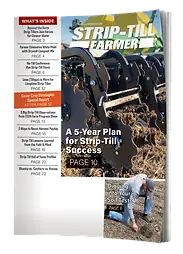
Strip-Till Farmer delivers a mix of features on strip-till farmers, strip-till management topics and trending practices in strip-till. This FREE quarterly print newsletter is available to qualified subscribers in the U.S. and Canada.
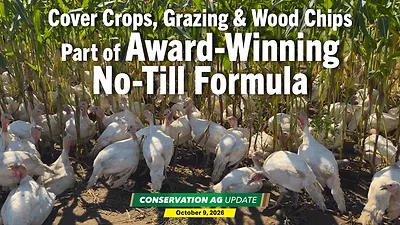
On this episode of Conservation Ag Update, brought to you by Bio Till Cover Crops, Bob and Robby Jewell explain how they incorporate wood chips, cover crops and rotational grazing into their Leopold Conservation Award-Winning no-till system in northeast Iowa.
TarasPort Trailers is a North American trailer manufacturer specializing in custom over-the-road trailer solutions for fleets, owner operators, and military use. Our company designs precision-built equipment transport trailers, freight trailer solutions, and mobile power trailer solutions...
Founded in 1954, Sullivan Hardware is a local hardware store in Indianapolis, IN. We provide the best in class products, including artificial Christmas trees, grills, and patio furniture. Spanning nearly seven decades and two generations, our family-owned business also conducts unique grilling...
Aero Energy provides professional fuel delivery services in Pennsylvania and Maryland. We offer residential fuel delivery and commercial fuel delivery backed by more than 95 years of service. Homeowners rely on Aero Energy for trusted residential HVAC services with heating, air conditioning, and...