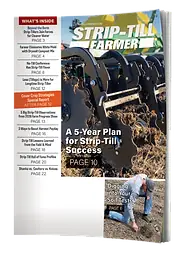
Below are some key strip-till takeaways from several of the features found in the Fall 2025 issue of Strip-Till Farmer.
Corn’s Response to Fertility Varies Based on Strip-Till Timing
- Rooting structure varies within strip-till.
- Fertilizer placement seems to affect above-ground growth.
- Fertility and placement affects root development.
Multi-Tasking Vertical Tillage Tools an Asset for Strip-Tillers
- Vertical tillage in the fall and strip-till in the spring can make for a winning combination.
- Managing residue not only makes planting easier but can speed up plant establishment.
- Vertical tillage can help strip-tillers address problems in the field without causing major soil loss.
Capturing Strip-Till Success on Tough, Poorly Drained Soils
- Strip-till can deliver big ROI on poorly drained soils. The biggest obstacle might be winning over your family members and peers who are skeptical of the practice.
- Try strip-tilling a few acres to see what works and what doesn’t before going all in on the practice.
- Enrolling in EQIP or CSP programs, or pooling your money together with a neighbor or family member for new equipment, will help make the entry point to strip-till more affordable.
Nutrient Use Efficiency Drives Strip-Till Adoption
- Strip-till can help reduce fertilizer use by 2 times, and arguably 5 times on a “grams per square inch” level.
- Through increased nutrient use efficiency, strip-till can help grow healthier and heavier plants, resulting in increased yield.
- No-till converts can benefit from reduced compaction, improved water infiltration and reduced erosion.