The late Dan Crummett had more than 40 years in regional and national agricultural journalism including editing state farm magazines, web-based machinery reporting and had a long-term interest in no-till and conservation tillage. He held B.S. and M.S. degrees from Oklahoma State University.
When strip-tillers and researchers talk about the benefits of soil microbes populating the root zone of field crops, the conversation generally revolves around more efficient plant use of nitrogen and potential reductions in losses of plant life’s hard-to-hang-onto primary food source.
Young Illinois farmer began strip-tilling his fields the fall before he got the deed to the land and by spring, even some of his closest doubters were convinced he was on the right track.
Clayton Coulter is a young man of purpose and it doesn’t take a long visit with him to realize the self-directed momentum that led him to launch his own farm at 24 years old as a strip-tiller for corn production — on land that had been 100% conventionally farmed for years.
Relying on equipment sharing and an agronomic eye, in 4 years of strip-tilling Justin Krell has cut fertilizer use by 30% and achieved 230-bushel corn.
Justin Krell says he started strip-tilling in 2017 mainly to make better use of his time and money — both important factors considering he’s trying to expand his farm while also working full-time as an agronomist for a seed corn company.
Illinois grower Craig Taylor uses strip-till, custom services and cover crops to achieve competitive yields using less labor and machinery, while also catching more rainfall and building soil organic matter.
When Craig Taylor decided to reduce machinery costs on his 725-acre corn and soybean farm in west central Illinois, he was convinced to move to no-till farming. But he also experimented with his crop service provider’s strip-till bar and liked the results.
The benefits of banded nutrients naturally led Dan Lane to strip-till 20 years ago and his corn yields and bottom line have proven it was a good change.
Since becoming the sole operators of their family’s Homewood Farms in 2000, Dan Lane and his wife, Jennifer, have used precision practices and conservation tillage to significantly boost corn and soybean yields as well as overall farm income.
Texas corn producers move their farm 1,300 miles east and pick up where they left off when their High Plains strip-till operation was displaced by a growing dairy. The sand’s the same in South Carolina.
It’s rare when a farm gets bought out that the owner moves half way across the country just to start again. That’s what brothers Brandon and Colt Woody did, after some serious, careful planning.
After 20 years of strip-till, Nebraska’s Scott Bussell has proven effective in saving soil, moisture, time and labor, while enabling more efficient use of applied nutrients.
Scott Bussell says there’s a big difference in maximum production and optimum production when it comes to his farm’s bottom line, and he credits 20 years of strip-till management for helping him take advantage of that difference.
Illinois corn grower and fertilizer application equipment maker sees significant yield increases in Mid-South cotton and corn production behind his precision-placement slot-sealing applicator.
Several years back John Miller had an epiphany while staring at a farm magazine cover photo. The picture featured a Mid-South farmer’s home-brew fertilizer applicator designed to place liquid nutrients in the valleys next to raised beds — a common practice in the Mississippi Delta.
Precision fertility placement & efficient residue nutrient cycling ensure Indiana strip-tiller’s corn won’t starve in critical final leg of race to harvest pay day.
The long-time proponent of banded fertilizer placement and owner of Banded Ag, a research, consulting and custom application business in Otwell, Ind., introduced his “feed the plant, not the soil approach” in the highest-rated session at the 2022 National Strip-Tillage Conference.
A longtime crop consultant and OEM equipment marketer-turned-manufacturer lays out the basics of strip-till ground-engaging tool designs and how to choose the best for your needs.
Bill Preller says knives are most prevalent in areas where strip-till evolved from converted anhydrous ammonia applicators and are more typical in central and northern Corn Belt fields.
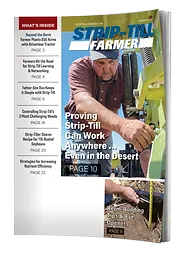
Strip-Till Farmer delivers a mix of features on strip-till farmers, strip-till management topics and trending practices in strip-till. This FREE quarterly print newsletter is available to qualified subscribers in the U.S. and Canada.
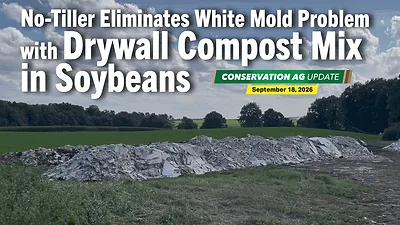
On this episode of Conservation Ag Update, brought to you by Yetter Farm Equipment, Greg and Janis Thoren share how they’re eliminating insecticides and fungicides on their Leopold Conservation Award-winning operation in Stockton, Ill.
TarasPort Trailers is a North American trailer manufacturer specializing in custom over-the-road trailer solutions for fleets, owner operators, and military use. Our company designs precision-built equipment transport trailers, freight trailer solutions, and mobile power trailer solutions...
Founded in 1954, Sullivan Hardware is a local hardware store in Indianapolis, IN. We provide the best in class products, including artificial Christmas trees, grills, and patio furniture. Spanning nearly seven decades and two generations, our family-owned business also conducts unique grilling...
Aero Energy provides professional fuel delivery services in Pennsylvania and Maryland. We offer residential fuel delivery and commercial fuel delivery backed by more than 95 years of service. Homeowners rely on Aero Energy for trusted residential HVAC services with heating, air conditioning, and...